
Water Pumps
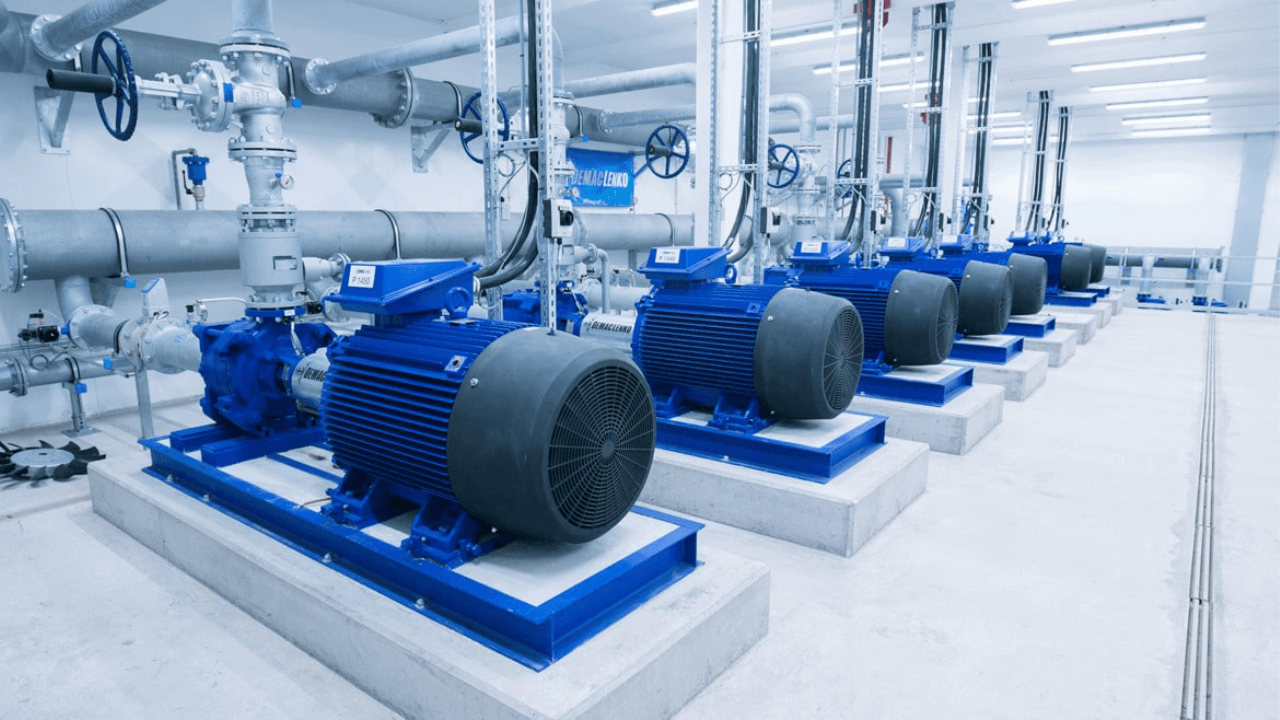
Many different types of pumps are employed in distribution systems. Low-lift pumps are designed to lift surface water and transport it to a nearby treatment plant—these transport vast amounts of water with relatively low discharge pressures. High-lift pumps discharge purified water into artery mains. These operate at higher pressures. Booster pumps raise water into an elevated storage tank or improve distribution system pressure. Pumps extract water from the ground and discharge it directly into a distribution system.
Most water distribution pumps are centrifugal, which means that a fast-revolving impeller provides energy to the water and boosts pressure inside the pump casing. The flow rate via a centrifugal pump is determined by the pressure at which it operates. The flow or discharge decreases as the pressure increases. Another sort of pump is the positive displacement type. This pump provides a fixed amount of water with each piston or rotor cycle. The water is pushed or forced out of the pump casing. A positive displacement pump’s flow capacity is unaffected by the system pressure.
