
High, Medium And Low Voltage Armored Cables
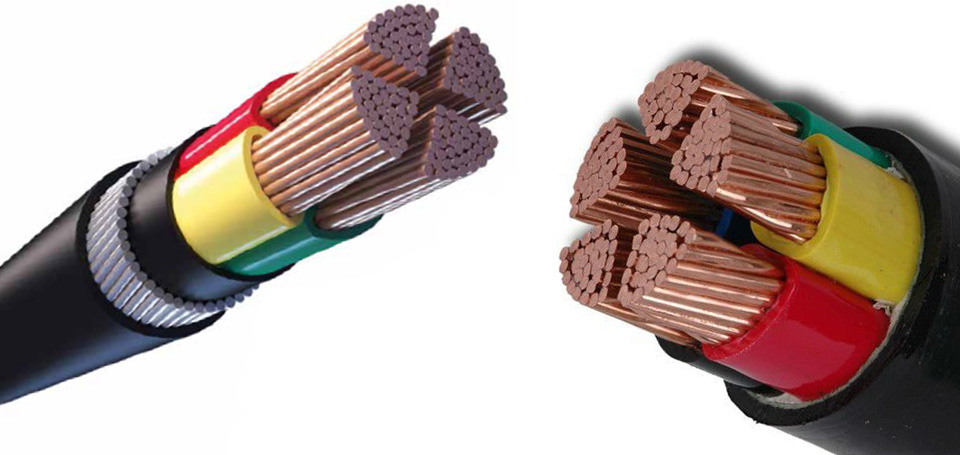
Cables play an important function in transporting power from generation to consumption areas. Nonetheless, not all cables are the same, and one of the primary distinguishing features is their capacity to endure varying degrees of tension. In this post, we’ll look at the distinctions between high and low-voltage cables, including their properties, applications, and technical issues.
Cables with voltages less than 1 kV (including 1 kV) are classified as low voltage, whilst cables with voltages greater than 1 kV are classified as medium or high voltage. In our daily life, it is normal to see cables with voltage levels of 0.6 kV to 10 kV.
The power cables are classified according to different voltage levels, which are divided into the power cables of 450/750V and below, low-voltage cable 0.6/1kv, medium voltage cable 3-35kv, high-voltage cable 350-110kv and ultra-high voltage cable 110-750kv.
Low voltage cables use common PVC and can produce cross-linked polyethylene, low voltage cable, and crosslinking the distinction between ordinary, but not high voltage cables in this distinction, are crosslinking cable, 6 kv, 35 kv using three-layer co-extrusion, high-density crosslinked polyethylene production
